
Jim Pirrie
Jim Pirrie
Jim Pirrie
service business owners
Why chase clients when the could be chasing you? 😎
I help smart service business owners like you get your whole business working like a well-oiled machine.
Not just marketing — everything from getting clients to turning them into your best source of new business
Because getting leads is only part of the story.
Lasting success comes from what happens next — and whether your business works as a system… or feels like a jigsaw.

Jim Pirrie
service business owners
The actual systems I use to build a business that runs predictably — not by guesswork
Not a list of tools. A working system you can actually follow — and what you need to make it work*.
* You don't need to be a power user.
Don’t be put off by the number of systems shown on this page — I'm definitely not a power user of any of them.
I've tried many tools, and rejected most of them. Those on this page made the cut. They are straightforward to use, and highly effective, even with minimal setup and no deep technical expertise. I use maybe 10% of their capability — but that gives me 90% of the benefit.
The real value comes from how their core features work together to give you a simple, dependable system — not from mastering every feature.
The goal is clarity and reliability—not complexity.
"So many apps to choose from!
Where do I even start?
— and there's more apps every day!
These tools are the foundation your business runs on, so it really does pay to choose your tools wisely.
I've tried more tools that I can count.
I was searching for a toolkit that was:
Proven to be effective
As integrated as reasonably possible, off the shelf
Scope for more integration later if I need it
Great support for when I need a hand
Something I could happily recommend to clients
And reasonably priced
That toolkit is on this page.
I only recommend tools I actively use in my own business and would confidently suggest to clients. If a tool isn’t good enough, it doesn’t appear here.
And these are all tools with a proven track record. Leave the flashy AI tools to the early adopters who understand and want to take the financial and business risk involved! Your priority is to build a robust, effective and scaleable system — you can experiment with new toys later.
This entire system follows the same logic as The Map. If you aren't familiar with that yet, you can get yours here:
Think Systems, Not Tools
The important thing is to think about it from a 'system' perspective, not a 'tool' perspactive.
So rather than classify a tool as a "CRM system", or a "Social Media Management Tool", I've grouped outcomes, shown where they sit on The Map, and where possible listed just one single tool under each group, and listed each too just once. Some are so capable, however, that they appear in several groups, and some groups necessarily require several tools!
Then I give a brief overview of the tool — with my personal opinion about why I chose it for my own business, and why I think it scores over the rest.
Then there's a link to a page on this site where you can find out more, and a link to the tool itself where you can set up a trial account if you want to see for yourself.
Your System Needs To (broken down):
Attract Attention and Generate Leads
Capture and Manage Client Conversations
Convert Enquiries Into Clients
Create Content
Publish and Distribute Content
Deliver Work to Clients
Improve and Scale The Business
Manage the Finances
Below you'll see exactly how this system is built.
A business without a system is unmanageable.
Tools without a system are useless.
A system without tools leads to burnout.
The right system, with the right tools gives you a business you can depend on.
"So where should I look first?"
If your business isn't working, the problem will always sit in one of these areas:
Attracting Attention and Generating Leads:
— "I don't get enough leads..."
— "Sometimes I get leads. Sometimes — nothing..."
— "I get loads of followers and likes — but no enquiries..."
Sounds like you're not attracting the attention of the right sort of people in the right way — or not doing it consistently.
Networking, online, direct outreach — they can all work, but you need a low-friction process to qualify people and move the conversation on — at scale. Many businesses struggle here. The right tools make a real difference.
Capturing and Managing Client Conversations:
— "I lose track of who I've spoken to, about what and when..."
— "I have a pile of business cards on my desk a foot deep. I've no idea who they all are..."
— "I promise to follow up and send people things — a week later I remember and it's too late..."
With so many things to think about, people to remember and promises to keep, it's really hard to keep track — and that means lost opportunities. The right tools fix that.
Convert Enquiries into Clients:
— "I get enquiries but can't seem to turn them into business..."
— "I get loads of people looking at my content — but not many clients come that way..."
Defining your offer well is fundamental to this (which I will explore elsewhere). Once you've done that, the right tools really help.
Creating Content:
— "I'm creating loads of content — but it's burning me out..."
— "I'm still struggling to get even a single video to go viral..."
— "I've tried the content thing — but it's really hard coming up with ideas..."
— "Yes, I do put stuff out there but nobody ever reads it — and if they do they bale out after a few seconds..."
— "I'd love to do video, but it looks so complicated and difficult..."
Creating really high-quality content is easier than ever, written or video. The quality of the content is more to do with process than tools. I'll cover the process elsewhere, but the right tools really simplify things.
Publishing and Distributing Content:
— "Creating content is one thing — but getting it out there is a pain..."
— "Everyone say I need to respond personally to comments — but keeping up with it is impossible..."
Most professionals I know are rather social-skeptic, and see the whole thing as both a necessary evil and a dark art. The right tools make it much easier to manage.
Delivering Client Work:
— "I have so many client projects on the go I lose track..."
— "Every time I do work for a client I seem to be re-inventing the wheel..."
— "I struggle to get consistency in my client work — and that sometimes hurts the relationship..."
Many businesses struggle with consistency — doing different things each time and being surprised when they don't get the same result. This is where the right tools really help.
Improve and Scale The Business
— "I'm sure there are opportunities for making things work better — but I have no idea where..."
— "Things do seem to get done — but I'm not entirely sure how..."
— "Things seem to get stuck or fall through gaps for no reason..."
It can be tricky understanding how your business actually works. In manufacturing, you would just change a drawing and everyone knows what you want. What's the equivalent in a business? The right tools make it easier to see what's going on — and manage it:
Managing the Finances:
— "I keep my records on a spreadsheet, but it's a bit clunky..."
— "I do my invoicing using Word. Seems to do the job..."
— "Direct debits? Yeah, great — that's for the big boys..."
— "VAT on online payments! What a nightmare..."
Managing the financial stuff is critically important, but can be more of a chore that it needs to be. This is where the right tools simplify things.
Attract Attention and Generate Leads
This is how I consistently attract the right people and turn attention into real enquiries.
What I use:
YouTube
Primary channel for long-term authority and search visibilty → Why I use YouTube →LinkedIn
For direct visibility, relationship building, and distribution → Why I use LinkedIn →Facebook and Instagram
For lightweight visibility and staying present with your audience → Why I use Facebook and Instagram →GoHighLevel
Hosts pages and captures incoming leads so nothing gets lost → Why I use GoHighLevel →OnePageCRM
Keeps track of real-life networking and cold outreach connections → Why I use OnePageCRM →Ticket Tailor
Handles bookings for promotional seminars → Why I use Ticket Tailor →
→ See how this works in practice →
Capture and Manage Client Conversations
This is how I keep track of every conversation, follow-up, and opportunity.
What I use:
OnePageCRM
Captures real-life conversations, email threads, and actions → Why I use OnePageCRM →Ticket Tailor
Allows me to communicate with event guests → Why I use Ticket Tailor →
→ See how this works in practice →
Convert Enquiries Into Clients
This is how I systematically convert leads into paying clients.
What I use:
OnePageCRM
Manage progress of real-life opportunities from enquiry to sale → Why I use OnePageCRM →GoHighLevel
Captures and progresses online prospects through to conversion → Why I use GoHighLevel →Better Proposals
Streamlines conversion of proposal-based opportunities → Why I use Better Proposals →Ticket Tailor
Handles bookings for paid events → Why I use Ticket Tailor →
→ See how this works in practice →
Creating Content
This is how I create high-quality written and video content.
What I use:
Research and Drafting
ChatGPT
Track progress of real-life opportunities → Why I use ChatGPT →NotebookLM
Automatically convert online prospects → Why I use NotebookLM →Microsoft365
Industry-standard suite of productivity and communication tools → Why I use Microsoft 365 →
Visuals
Canva
Quick and easy way to create graphics and images → Why I use Canva →Adobe Creative Cloud
Powerful suite of tools for graphics, images and video production → Why I use Adobe Creative Cloud →Adobe Firefly
Lets you generate high-quality images using AI → Why I use Adobe Firefly →
Video
Camtasia
Easy way to edit videos and app walkthroughs → Why I use Camtasia →Adobe Firefly
Lets you generate high-quality B-roll clips using AI → Why I use Adobe Firefly →PromptSmart
Teleprompter that follows your voice as you read a script → Why I use PromptSmart →
Consistency and Control
CheckFlow
Lets me define and execute standard processes → Why I use Checkflow →
→ See how this works in practice →
Publishing and Distributing Content
This is how I schedule and publish content across multiple platforms.
What I use:
GoHighLevel
Lets me schedule and publish posts across every platform from one centralised dashboard → Why I use GoHighLevel →CheckFlow
Lets me define and execute standard processes → Why I use Checkflow →
→ See how this works in practice →
Delivering Client Work
This is how I track status and progress across multiple client projects.
What I use:
Clickup
Lets me manage multiple complex projects and keep on to of everything → Why I use ClickUp →OnePageCRM
Keeps track of client communications → Why I use OnePageCRM →Microsoft365
Industry-standard collaboration tools for reviewing and feedback → Why I use Microsoft 365 →CheckFlow
Lets me define and execute standard processes → Why I use Checkflow →
→ See how this works in practice →
Improving and Scaling The Business
This is how I measure what's happening, identify improvements, and manage projects.
What I use:
Clickup
Holds SOPs, keeps everything organised and lets me manage multiple complex projects → Why I use ClickUp →Funnelytics
Lets me see how my lead generation funnels are performing → Why I use Funnelytics →CheckFlow
Lets me define and execute standard processes based on SOPs → Why I use Checkflow →LucidChart
Lets me create flowcharts to plan how everything fits together → Why I use LucidChart →Zapier
Lets me connect apps together even if they don't integrate natively → Why I use Zapier →
→ See how this works in practice →
Managing The Finances
This is how I make managing the finances as easy as possible.
What I use:
Stripe
Lets me take online credit card payments and subscriptions, and manage VAT → Why I use Stripe →GoCardless
Lets me take payments via direct debit instead of credit cards → Why I use GoCardless →QuickBooks
Lets me define and execute standard processes → Why I use QuickBooks →
→ See how this works in practice →
How This Works In Practice
Here’s what this actually looks like when the system is running
— from first contact to ongoing clients
Some of these stages happen in sequence. Others run continuously in the background. Together, they form a complete system.
How I Attract Attention and Generate Leads
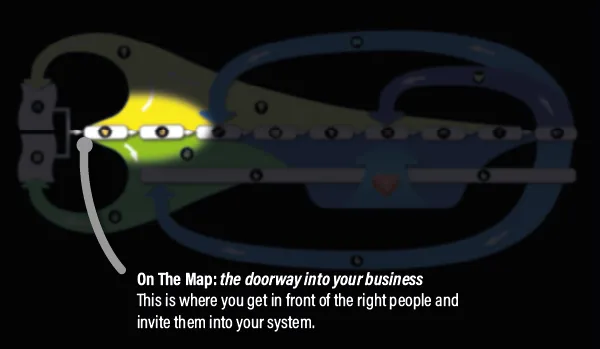
If you want to see how this fits into the full system:
By design, there are only two ways clients come to my business:
they find me — online or through a referral
or I reach out to them directly
Both are planned — and supported by systems.
To help people find me online:
For visibility and search presence → otherwise you won't be found consistently:
YouTube — long-term authority and search visibilty
LinkedIn — direct visibility
Facebook and Instagram — staying visible and active
My Blog — hosted on GoHighLevel
For managing engagement → otherwise messages get missed and people feel ignored:
GoHighLevel — monitors comments, messages and reviews across platforms, so it's all in one place and I can respond from there
For turning visitors into contacts → otherwise people leave — and you lose them:
Ticket Tailor — Allows me to offer tickets to free real-life events
GoHighLevel — captures incoming leads and follows them up automatically by email
→ This is the crucial step — views, likes and shares have no value until they become contacts.
For networking and direct outreach, I use:
OnePageCRM — tracks conversations and follow-ups → otherwise contacts get forgotten and oppotunities lost
→ Most people skip this — and rely on a simple contacts list. Conversations get lost, and opportunities go with them.
None of this is accidental — it's deliberate.
How I Capture and Manage Client Conversations
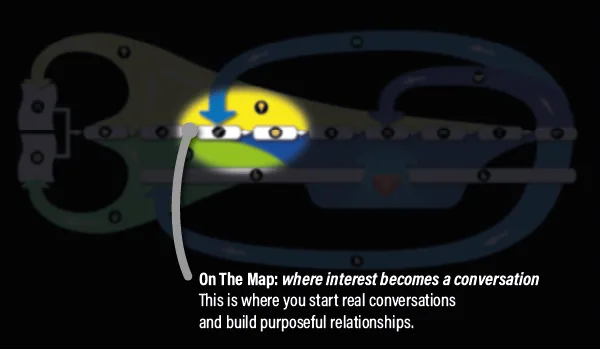
If you want to see how this fits into the full system:
Keeping track of conversations — and moving them forward — is core to building relationships that turn into clients.
Online, a cold visitor won’t book a call or join a list without a compelling reason.
So I offer something genuinely useful — free — in exchange for contact details.
On my website, I use:
Ticket Tailor — which makes it easy to offer tickets to free real-life events and follows up automatically
GoHighLevel — which makes it easy to offer free resources and follows up automatically
→ These turn my website into a consistent lead generation asset.
In the real world, conversations get lost:
business cards pile up
follow-ups get missed
and you forget what was said, with whom, and what you promised to do next
So for networking and direct outreach, I use:
OnePageCRM — tracks conversations, actions and next steps clearly → otherwise contacts get forgotten and opportunities lost
Ticket Tailor — lets me book guests into real-life events there and then → otherwise the contact might forget and never book
None of this is accidental — it’s deliberate.
How I Convert Enquiries Into Clients
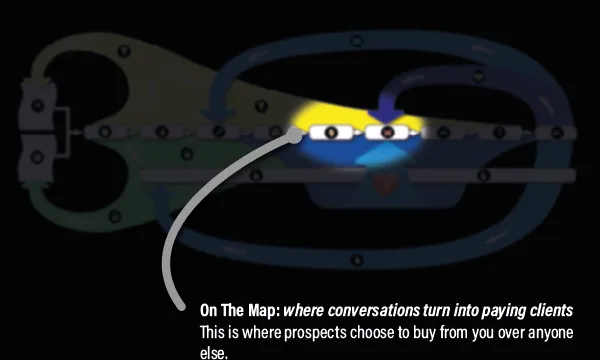
If you want to see how this fits into the full system:
When someone enquires, the goal isn’t to “sell” them — it’s to understand whether there’s a real fit.
Some people are a good fit. Some aren’t.
It’s better to be clear about that early.
So the conversation follows a simple structure:
understand what’s going on
identify what they’re trying to achieve
decide whether I can genuinely help
If there’s a fit, the next step is straightforward.
I explain what I would do, how it would work, what it would achieve, and what it would cost.
Then they decide whether to go ahead.
No pressure, technique or chasing — just a clear decision based on whether it fits.
The process is the same online and in real life — just handled differently.
Online, I offer courses and programmes:
GoHighLevel
Hosts offer pages, courses, memberships, communities, and follow-up
Stripe
Handles payments, recurring subscriptions and tax
GoCardless
Handles recurring direct debits
In the real world, I offer coaching, consulting, seminars, and guest opportunities on my platform:
OnePageCRM
Manages conversations, next steps and follow-ups
Ticket Tailor
Manages seminar bookings and communication
Better Proposals
Creates clear, professional proposals
None of this is accidental — it’s deliberate.
How I Create Content
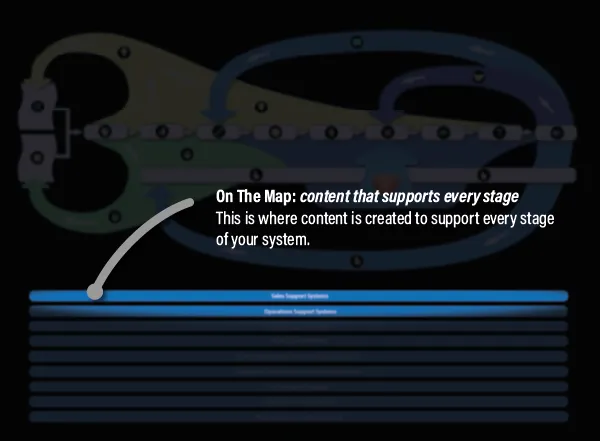
If you want to see how this fits into the full system:
Content underpins my business:
— It's how people find me online
— It's how people know to trust me
— It gives people confidence I know what I'm talking about
— It gives people confidence I can give them practical, real-world help
— It moves people towards free or paid offers
Everything is designed to support those.
From there, I answer real questions and solve real problems.
I don't try to be everywhere or burn myself out with an unachievable schedule. I focus on building a library of high-quality, long-form content that stays useful over time.
And from each single long-form piece, I create articles, YouTube videos, shorts, social posts and newsletters.
But my starting point is primarily long-form YouTube videos.
I also make sure every piece of content has a clear next step:
starting a conversation
watching the next video
downloading something useful
considering a paid offer
To create consistent, quality content and make the most efficient use of time, I use:
Research and drafting
ChatGPT
NotebookLM
Visuals
Canva
Illustrator and Photoshop
Video
Camtasia
Premiere Pro
Firefly
PromptSmart
Consistency and Control
CheckFlow → keeps workflows consistent and repeatable
None of this is accidental — it’s deliberate.
How I Publish and Distribute Content
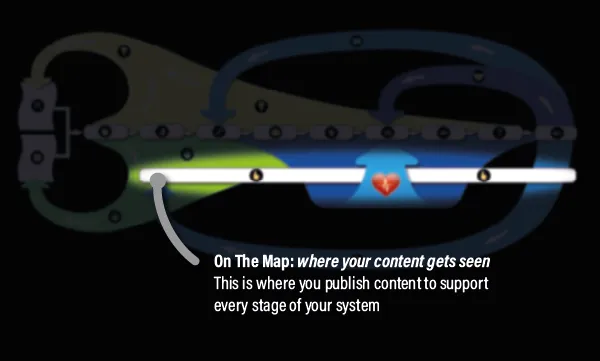
If you want to see how this fits into the full system:
This is how useful content is consistently put in front of the right people.
I use different channels for different purposes:
YouTube to build long-term visibility and search presence
LinkedIn for create direct engagement and conversations
Facebook and Instagram to keep things visible
my blog for search visibility on my website
my email newsletter to keep me top of mind
I use:
YouTube — primary platform for long-form content
Facebook & Instagram — for ongoing visibility
LinkedIn — for direct engagement and reach
GoHighLevel — hosts blog content, email newsletters, and schedules posts across platforms
None of this is accidental — it’s deliberate.
Hoow I Deliver Client Work
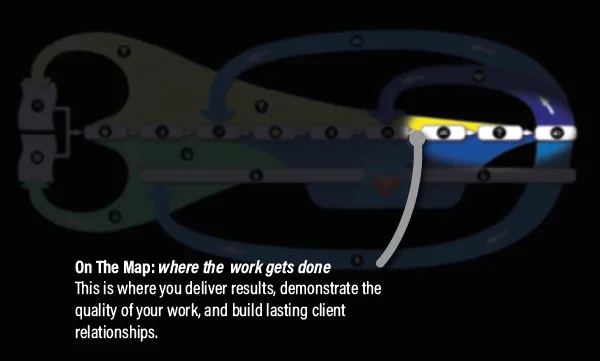
If you want to see how this fits into the full system:
This is where promises turn into real results.
Clients come to me with specific challenges, and my approach is to understand symptoms and system first:
understand the current situation — what are the symptoms?
identify the root cause — how does the system work and where is it compromised?
define the desired outcome — how does the system need to work?
design a practical way forward — what changes and resources are needed, how will they affect the system, and what will that mean?
plan and implement the solution — what steps should be taken to make it happen?
Dialogue, reviews and collaboration ensure expectations are clear, actions agreed and next steps defined — nothing assumed, left ambiguous or dependent on memory.
I use:
OnePageCRM — manages client relationships, actions, and follow-ups
ClickUp — manages project delivery
Better Proposals — produces documents where formal scope and agreements are required
CheckFlow — keeps workflows consistent and repeatable
These tools help keep the focus on achieving practical, real-world outcomes.
Over time, that builds trust — and often leads to referrals and further opportunities.
None of this is accidental — it’s deliberate.
How I Improve and Scale The Business
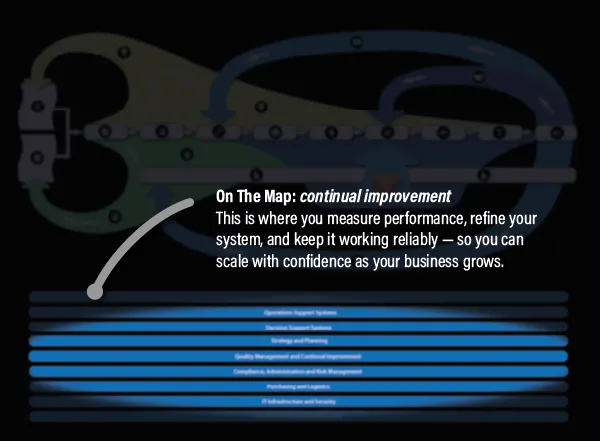
If you want to see how this fits into the full system:
This is how the business improves and scales over time
I use the same systems-based approach for my own business as I do for clients, driving a continual process of incremental change:
measure → identify hotspots → prioritise → make one change → measure again — and repeat.
If it improves, keep it. If not, undo it and try something else.
Doing this successfully depends on:
having the right data — so I can see what is actually happening
knowing my KPIs — so I know what matters
knowing my benchmarks — so I know what good, bad and indifferent look like
understanding my system — so I know the chain of cause and effect
Then it's possible to see where to focus to make the biggest difference by:
improving process flows
adjusting messaging
refining offers
streamlining handoffs
upgrading systems
strengthening communication
This applies across the whole business system — all the support activities as well as the client journey.
I use:
Clickup — stores SOPs, manages improvements and operational changes
GoHighLevel — monitors lead flow, engagement, and follow-up
Funnelytics — maps and measures lead generation performance and conversions
CheckFlow — defines and executes standard processes based on SOPs
LucidChart — maps processes and workflow
Zapier — connects systems and atomates data flow
Nothing is changed at random, and nothing is left to drift.
Over time, deliberate, incremental improvements compound into a more consistent, efficient, and profitable business.
None of this is accidental — it’s deliberate.
How I Manage The Finances
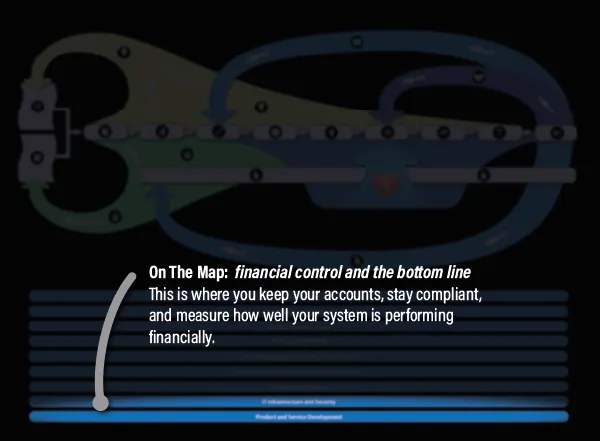
If you want to see how this fits into the full system:
This is how the business remains sustainable, profitable, and resilient.
Strong financial management provides clarity on performance, supports informed decision-making, and enables confident investment in future growth.
Rather than relying on guesswork, I take a structured and proactive approach to managing the finances:
Visibility — understanding exactly where money is coming from and where it is going
Profitability — ensuring that work is commercially viable and appropriately priced
Cash Flow — maintaining sufficient liquidity to operate and grow with confidence
Compliance — meeting all tax and regulatory obligations
Planning — using financial insight to guide future decisions
So I can:
Price services with confidence
Monitor the financial health of the business
Make informed investment decisions
Plan for sustainable growth
Avoid unpleasant surprises
My approach includes:
Regular financial reviews to track income, costs, and profitability
Clear separation of business and personal finances
Forward-looking cash flow awareness, not just historical reporting
Engaging reputable professional accountants to ensure accuracy and compliance
I use:
QuickBooks — day-to-day bookkeeping, invoicing, expense tracking, and financial reporting
Stripe — secure online card payments and subscription management
GoCardless — recurring direct debit payments
Merranti Accounting — professional accounting support, statutory compliance, and strategic financial guidance
Sound financial management underpins every other part of the business. It ensures that marketing efforts are sustainable, client work is profitable, and growth is both intentional and resilient.
Nothing is left to chance. Financial discipline provides the foundation that allows the rest of the system to operate with confidence.
None of this is accidental — it’s deliberate.
Everything you’ve seen on this page gives you a model for building a consistent, dependable, and scalable business.
From attracting the right people, to managing conversations, converting enquiries, delivering client work, and continually improving the system — each part is intentional and supported by the right tools.
I've spent years of trial and error to seek out the tools to run my own business on, and I genuinely believe those on this page to be the best compromise of functionality, useability and affordability for my business.
If you are running an expert-led professional service business, then there's every chance you can go to market faster and more effectively by adopting some or all of these, rather than doing it the hard way — through your own painful trial and error.
Start by exploring The Map — the system that underpins everything:
Then take a closer look at the tools I use — and why I chose them:
Each link takes you to a page on this website where I explain in more detail what each tool offers, and why I choose to use it in preference to anything else:
Visibility & Lead Generation
GoHighLevel
YouTube
LinkedIn
Facebook
Instagram
Blog
Website
Offer Pages
Landing Pages
Research & Productivity
ChatGPT
NotebookLM
Sales & Client Management
OnePageCRM
Ticket Tailor
Better Proposals
Content Creation
PromptSmart
Camtasia
Photoshop
Illustrator
InDesign
Firefly
Delivery & Operations
ClickUp
CheckFlow
Funnelytics
Lucidchart
Zapier
Finance
Stripe
GoCardless
QuickBooks
Do I need all these tools?
Choose the tools you need to support the processes and workflows that underpin your business. So the first step is always to define those — The Map is a great place to start — and then adopt the tools you actually need as you start to see where the system would benefit. I talk about incremental change earlier on this page, and that's the secret: don't try to do everything at once. Start at the beginning, and step by step build what you actually need. No more, no less.
Do I need this all at once?
Definitely not! I talk about incremental change earlier on this page, and it's important to go step by step — otherwise you risk confusion and overwhelm. Let the process of developing and improving your business over time guide the decisions about what tools you need to support it. Identify places that need improving, prioritise them, and — as you need them — adopt the tools you need to deliver the improvement. Over time you will build a solid, scaleable business.
Is this approach just for solo professionals?
Certainly it is easy to optimise for solo professionals, but this systems approach — and the tools I use — are incredibly flexible and adaptable. Every business follows the same basic model from client acquisition through sale to fulfilment, and demands the same sort of activities — online presence, project management, client management, workflow management and so on — and these tools will support those activities in any context.
Can these tools integrate with my existing systems?
In general, yes, many of these tools have native integrations with other popular applications, and where a direct connection isn’t available, Zapier often provides a flexible way to link systems together. Many tools also offer APIs for more advanced or custom integrations. If you have a specific question, get in touch and I'll be pleased to help.
How long does it take to implement this system?
It depends! If you are starting from scratch, using The Map and this suite of tools will get you to market faster than any other approach I can think of, simply because you can see clearly where to start, and what to do next — and that means you can build your 'minimum viable product' really quickly, test it in the marketplace, and develop your business incrementally from there. For example you could have your website, lead magnets and follow-ups in place in a few days, be creating and posting content a few days after that, and starting to see traffic and signups soon after that (no guarantees, of course — your actual results depend on many other factors).
If you're already up and running, then you will already be doing pretty much everything on this page — but perhaps not consciously and systematically. The best thing to do then is to use The Map to review how your own business system functions at the moment, and commit to a programme of incremental and continuous improvement. You might also find there is a case for revolutionary change if, for example, you find your processes and systems aren't fit for purpose in some way and rebuilding a particular activity from scratch would be the best option. It all comes down to what best serves the business.
What if I already use different tools?
No problem. If the tools you use are working for you, that's great — no change necessary. But if the tools you use now aren't doing the job as you would wish, then it's certainly worth exploring alternatives and assessing the business case for changing.
Can you help with putting all this together?
Certainly, yes. That can happen in a number of ways:
Some clients need accountability and support rather than specific help, and join one of my group programmes where they meet regularly with other businesses on the same journey and we discuss issues and explore ideas as a group.
Some clients like to use me in an advisory and coaching role, helping them design and refine how their business works, keeping them on track as they follow through with implementation, and helping to coach their teams through the transitions these changes often create.
Others want a more hands-on approach — anything from helping them set up systems, processes and workflows, through to using my associate team of developers to design and build custom integrations and even completely custom-built software tools.
If you want to explore how any of these could work for you and your business, please get in touch and I'll be pleased to help.
Helping expertise-led service businesses build predictable, scalable growth

Jim Pirrie helps expertise-led service businesses turn their knowledge into consistent client growth using simple, structured, systems-based approaches. He is the creator of the Client Lifecycle System and producer of the Unboxing Business authority marketing platform.
He is the author of Confidence, Presence and Purpose, a practical handbook for business speakers, presenters and facilitators.
Explore the tools I use
Marketing & Lead Generation
Why I use GoHighLevel
Why I use OnePageCRM
Why I use Better Proposals
Why I use Funnelytics
Why I use Ticket Tailor
Productivity
Why I use PromptSmart
Why I use ClickUp
Why I use CheckFlow
Why I use Lucidchart
Jim Pirrie Ltd is registered as Company number 04294627 in England and Wales. VAT Number 785 1095 10
Registered Office: 10, Scandia-Hus Business Park, Felcourt Rd, Felcourt, East Grinstead RH19 2LP
Privacy Policy | Terms and Conditions | Website Terms of Use | Data Processing Agreement | Guest Release
Unboxing Business™, Authority Marketing Platform™, The Visibility Works™, The Map™ and Client Lifecycle System™
are trademarks of Jim Pirrie Ltd. All rights reserved.
Unboxing Business and The Visibility Works are trading names of Jim Pirrie Ltd.
© Jim Pirrie 2001 - 2026 All rights reserved
All tools featured on this site have been selected based on my personal experience and their suitability for running a professional service business. I only recommend tools I personally use and trust, and recommendations are not influenced by commercial relationships.
Any examples or case studies shared are illustrative and not a guarantee of results. The success of any business system depends on many factors, including implementation, market conditions, and individual circumstances.
The information provided on this website is for general guidance only and does not constitute professional, financial, or legal advice. You should seek appropriate professional advice tailored to your specific circumstances before making business decisions.
Some links on this site may be affiliate links. If you choose to use them, I may earn a commission at no additional cost to you. I only recommend tools I personally use and trust.